01

0:00–5:00First Responders to the SingularityINTERLUDE
Dispatches from the Edge
Cold-open teasers — Altman's walk-back, Grokbot, Waymo's redesign — then roll call: Salim at a São Paulo airport, Emad in Copenhagen.
Peter · Salim · Emad · Dave
02

5:00–10:00First Responders to the SingularityINTERLUDE
Remember How Slow
Community love, an AMA invite, the week's rundown; Dave frames the mission: chronicling the step function — remember how slow it was.
▸ We parse through probably 400 stories to narrow it down to 15 or so.
Peter · Dave
03
▶ ANIMATED
10:00–15:00Sam's Slow-DownVERIFIED
The Rising Tide
Altman's clip: the economy has inertia, timelines were too ambitious. Salim blames pace layers; Alex blames abstraction layers, prescribes vertical integration.
▸ Sam Altman: 'I think it means we've all been too ambitious on timelines, even with this incredible technology.'
✓ Real, and the tension is on the record in the same week. The clip is from David Senra's podcast conversation with Altman released Aug 23, 2026 — reported quotes match the tape ('I thought when we got to GPT-4 back in 2023 that there was going to be much more disruption in software'; the economy's inertia makes the transition 'smoother and slower'), with disruption timelines pushed toward end-2028. Meanwhile TIME — published Aug 27, the day this episode dropped — quotes OpenAI as '80% of the way to AGI,' with Altman expecting a system he would personally call AGI by end of 2026. Emad's 'two things at once' critique is documented, not spin.
Sam · Salim · Alex · Peter
04

15:00–20:00Sam's Slow-DownHOST TAKE
Two Things at Once
Emad: models only got good months ago. Dave: a picketed, guarded, pre-IPO Sam now speaks through PR. Alex: supply outruns demand.
▸ Emad: a TIME article just came out with Sam saying we'll have AGI by the end of this year.
Emad · Dave · Peter · Alex
05
20:00–25:00The Grokbot SwarmVERIFIED
Enter the Grokbot
Labs dream past job automation toward $30-trillion markets; then Grokbot arrives — every agent gets its own cloud computer and colleagues.
▸ Grokbot launched August 11th in early beta; each bot gets its own dedicated cloud computer with a browser and a terminal.
✓ Real product, real date, real deal. Grok Bot (the tape's 'Grokbot') launched in early beta Aug 11, 2026 with per-bot dedicated cloud computers, app logins, inter-bot messaging and multi-bot fleets, per xAI's own announcement; access bundles into Cursor Ultra/Teams and SuperGrok Heavy tiers. The Cursor number survives the hard check: SpaceX announced the $60B all-stock acquisition June 16, 2026 — days after its IPO — and closed Aug 15 after HSR antitrust review, matching Dave's timeline. And the $30T total addressable market really is what Anthropic told IPO investors (reported Aug 26): its own pitch number, roughly US GDP, not an external estimate.
Dave · Alex · Peter · Salim
06
▶ ANIMATED
25:00–30:00The Grokbot SwarmBOLD CLAIM
Eighteen Bots Deep
Emad runs 18 Grokbots — an atelier bot learning art, another tuning models; Dave buys a 100K swarm; Alex calls it vaudeville.
▸ Emad: 'I've got 18 Grokbots working on the swarm' — one tune added 76% performance at 64K context.
⚠ Self-reported — Emad's 18-bot swarm, the Tailscale rig over a MacBook M4 Max and an RTX 5090, the 'Atelier' art-director bot and the '+76% at 64K context' tune are his own on-air statements and appear in no public document we can find. Plausible: Grok Bot verifiably supports fleets, per-bot cloud computers and messaging. But per house rule, a participant's numbers about his own setup stay self-reported until a post or repo documents them.
Emad · Peter · Dave · Alex
07

30:00–35:00Benchmark WarsVERIFIED
Google Strikes Back
Grokbot kudos wind down; Google's Gemini 3.7 Flash tops the analyst-agent benchmark and Peter asks whether Google is truly back.
▸ Gemini 3.7 Flash achieved a 60% pass rate on the analyst agent benchmark, beating Claude Opus 5 at 54%.
✓ Checks out against the benchmark publisher. Artificial Analysis (Aug 13, 2026) shows Gemini 3.7 Flash (high) at 60% on AA-AnalystAgent — 80 questions across 14 business domains on real spreadsheets and documents, scored on all-five-runs-correct, exactly as Alex describes — ahead of Claude Opus 5 (max) at 53.8% and Claude Fable 5 at 48.8% (the tape's 'and 5 at 49%' dropped the model name). One referent slipped: '2.4x faster' is versus its closest-accuracy rival; against GPT-5.6 Terra, AA's own throughput numbers put it nearer 3x.
Salim · Peter · Alex
08
35:00–40:00Benchmark WarsHOST TAKE
Starved at the Feast
Alex says the benchmark rewards determinism, not frontier smarts; Emad and Dave diagnose Google's malaise — talent attrition, not compute scarcity.
▸ Emad: training a frontier-level model today needs only two to four thousand TPUs for 60 to 90 days.
Alex · Emad · Dave
09

40:00–45:00Benchmark WarsHOST TAKE
Who Owns the Frontier
The panel ranks the labs: Anthropic's model versus OpenAI's Pareto frontier and capital; Salim calls it the innovator's dilemma from hell.
▸ Emad: OpenAI has more capital raised than Anthropic — they had the $120 billion round.
⚠ One claim from this stretch fails the check: 'Anthropic is totally reliant on Elon for compute' matches no public record — the documented compute deals are Google TPUs (up to 1M), roughly 1M Amazon Trainium chips, and a $21B Broadcom silicon deal. Google and Amazon, not Musk.
Peter · Dave · Emad · Alex · Salim
10
45:00–50:00Verticalize EverythingVERIFIED
The Six-Billion Hackquisition
NVIDIA pours billions into Poolside to build America's open-weight champion; Alex dissects the hacquisition and eyes the carcass left behind.
▸ NVIDIA is pouring $6 billion into an open-source AI model and inference infrastructure with Poolside.
✓ Freshly announced (~Aug 24, 2026): NVIDIA pays $6B to license Poolside's model-factory technology and invests a further ~$1B at a $12B pre-money valuation, with 100+ staff (reported 109) joining NVIDIA to build the open-weight Nemotron line — a license-plus-hire structure matching Alex's 'hackquisition' read. The founders check out (ex-GitHub CTO Jason Warner, Eiso Kant). The Vaswani/Essential AI hire Emad mentions appears in no public document — exactly as he himself flagged on air.
Peter · Emad · Alex
11

50:00–55:00Verticalize EverythingHOST TAKE
Moon Colonies and Loopholes
Dave explains 30-day merger math; Poolside's leftover builds a gigawatt data center; the panel asks if Anthropic gets a moon colony.
▸ The remaining Poolside Infrastructure Company is building a 1.2-gigawatt data center.
⚠ One number needs an asterisk: a 'Poolside Infrastructure Company' and its '1.2 GW' figure appear in no public reporting. The record shows Poolside's West Texas data-center effort as Project Horizon at roughly 2 GW — real, and reported troubled, with CoreWeave having pulled out.
Dave · Alex · Emad · Peter · Salim
12

55:00–60:00Under SiegeVERIFIED
Siege of the Open Weights
Three siege stories: Kimi Linear's memory breakthrough, Fable 5 trailing cheaper rivals in enterprise spend, and Anthropic reversing data retention before its IPO.
▸ Kimi Linear cuts context memory by 75% while delivering 6x faster decoding for a one-million-token context window.
✓ The numbers are real; one date is not. Kimi Linear — up to 75% KV-cache reduction, ~6x decoding throughput at a 1M-token window — is exactly what Moonshot AI published… on October 31, 2025, ten months before this episode; Alex's on-air 'we've known since last fall' is the accurate version. The FT/Ramp story says what the tape says it says — Fable 5 at ~11% of Anthropic enterprise spend, behind the cheaper Opus 4.8 — but that describes one premium SKU, not the company: ARR was $65B at end-July and accelerating (Bloomberg/CNBC). And the retention reversal is real: Bloomberg (Aug 20) reports enterprise customers will be able to keep data on their own cloud infrastructure; the ~30-day window itself stays.
Peter · Dave · Emad
13

60:00–65:00Under SiegeHOST TAKE
The IPO Gauntlet
Why race to IPO? Emad says don't; Dave says Karp's attack and board pressure make retreat impossible; Alex sees a starting gun.
▸ Emad: Dario owns 2% of the company, as do his seven co-founders, and they pledged to give away 90% of it.
Emad · Salim · Dave · Alex
14
▶ ANIMATED
65:00–70:00Under SiegeEARLY SIGNAL
A Hundred Times Cheaper
Alex says the economy isn't clever enough for Fable 5; Emad prices the gap: three benchmark points, one hundred times cheaper.
▸ Emad: Fable scores 60 on the Artificial Analysis benchmark; the new GLM flash scores 57 and is about 100 times cheaper.
⚠ Early signal — the direction is real, the prices are loose. The stealth model tearing up benchmarks was OpenRouter's 'Ox Alpha' (not '01'), revealed as Zhipu/Z.ai's GLM-5.3-Flash; Z.ai's claim that it serves entirely on Chinese (Huawei) chips at tens-of-trillions-of-tokens scale is company-reported and third-party-unverified. The tape's pricing pairs don't match official cards: Fable 5 lists $10/M input and $50/M output ('15 bucks' matches nothing official) and the '14 cents' figure is unconfirmed — the gap is real; the '100x' is a rule of thumb, not a receipt.
Alex · Peter · Dave · Emad
15

70:00–75:00AI Plays CupidVERIFIED
The Algorithmic Yenta
Ditto texts college kids one Wednesday date: no swiping, no choice. The panel sees AI deleting interfaces, becoming life's trusted intermediary.
▸ 160,000 college students have signed up; Ditto has already produced 80,000 dates.
✓ Confirmed, with the caveat that the growth numbers are company-reported: TechCrunch (Aug 6) documents the Berkeley-dropout founders (Allen Wang, Eric Liu), the $9.2M seed and the every-Wednesday-7pm match text; CBS Bay Area (Aug 21) reports 'more than 160,000 students' and 'over 80,000 dates' — the tape's exact figures, sourced to the company (TechCrunch had 150,000 on Aug 6, so the trajectory is visible).
Peter · Salim · Dave · Emad
16

75:00–80:00AI Plays CupidINTERLUDE
Body Counts and Higher Aims
Alex roasts Ditto's body-count detector as wasted reasoning tokens; Peter defends matchmaking against a 50% divorce rate. Solve everything first.
▸ Ditto's detector uses 478 facial points and 52 micro-expressions over five seconds to estimate a person's past partners.
✓ Alex quoted the site verbatim: ditto.ai/bodycount really does say it maps '478 facial points and 52 micro-expressions over five seconds,' anchored to 'Pew & CDC NSFG medians by age.' Whether it should exist is a different question — reasoning tokens included.
Alex · Peter · Dave
17
▶ ANIMATED
80:00–85:00The Judgment BottleneckHOST TAKE
Humans Are the Bottleneck
The Wall Street Journal confirms it: agents multiply output until human judgment is the bottleneck; everyone confesses they're working harder than ever.
▸ Per the Wall Street Journal, a founder who used to manage five tasks now manages 50 agent outputs.
Peter · Salim · Dave · Alex
18

85:00–90:00The Judgment BottleneckHOST TAKE
Don't Do the PhD
Savor the window: Alex gives it three years. Emad says skip the PhD; Peter notes they're pulling up their own ladder.
▸ Alex, to a center of physics PhDs: 'Physics is cooked, and you should probably be reconsidering all of your career trajectories.'
Alex · Emad · Peter · Dave
19
90:00–95:00Atoms Push BackVERIFIED
Not in My Backyard
Data-center opposition hits 75%; Sanders wants a moratorium. The water math says golf courses use triple — but trust, not facts, rules.
▸ A year ago Americans split 43–42 on nearby data centers; today opposition is 75%, with 61% strongly opposed.
✓ Every number matches the primary. Heatmap's Embold Research poll (fielded Aug 8–13, 2026; n=2,045 registered voters) found 75% oppose a data center near their home, 61% strongly — versus a 43–42 split a year earlier, one of the fastest opinion shifts Heatmap has measured. The Sanders–AOC AI Data Center Moratorium Act is real (introduced March 2026; Sanders re-upped the call citing the 75% poll). The viral water chart is the shaky part: it mixes withdrawals, consumption and 'virtual water' — golf's ~2B gal/day is a real GCSAA-derived figure, power's 133B is withdrawals mostly returned to source, data centers' 627M includes electricity's embedded water (direct on-site use is far lower), and the 137B cattle figure appears in no federal water dataset. The panel's own skepticism was warranted.
Peter · Alex · Dave · Salim
20
▶ ANIMATED
95:00–100:00Atoms Push BackVERIFIED
The Eighty-Three Percent Slash
Nuance has no viral coefficient; a water-negative data center exists; then Waymo's reveal — autonomy hardware slashed from $115,000 to $20,000.
▸ Waymo's custom 5-nanometer chip helped slash sixth-generation autonomous-driving hardware costs from $115,000 to $20,000.
✓ Real announcement, right week: Waymo disclosed its first custom chip Aug 20, 2026 (blog post + Hot Chips talk) — a 5nm TSMC sensor-fusion processor at 1,000+ TOPS, which is indeed one quadrillion operations per second. The cost cut is real but the tape states points where the record has ranges: prior-gen driver hardware $100,000–$125,000, sixth-gen $20,000–$25,000 (Waymo's own words: 'less than $20,000'). '$115K→$20K' and the title's '83%' are analyst arithmetic inside those ranges — the honest headline is 'roughly 75–84% cheaper.'
Salim · Dave · Alex · Peter
21

100:00–105:00Atoms Push BackVERIFIED
Whose Hardware Stack
Fewer, better sensors — and a Zeekr-built minivan. Alex vents about white-labeled Chinese hardware while Dave watches giants collide into super-companies.
▸ The new Waymo driver uses 13 cameras, four LiDARs and six radars — total sensor count cut by more than 40%.
✓ Vehicle, maker and sensors confirmed; price and timing patched. The Ojai is built by Zeekr (Geely) in Ningbo with final assembly in Mesa, AZ; 13 cameras (17MP), 4 lidars and 6 radars vs the I-PACE's 29 cameras and 5 lidars — ~42% fewer sensors. But the Ojai costs about $125,000 — roughly $75,000 LESS than the ~$200,000 gen-5 Jaguar; the tape turned the saving into the price. 'Unveiled this week' compresses two years (announced Aug 2024, first riders May 2026); the actual this-week news: open to ALL riders in SF/LA/Phoenix Aug 19, chip revealed Aug 20. And it was NEVADA — not 'Nvidia' — that cleared Tesla, Uber and Waymo for Las Vegas robotaxi operations (Tesla's initial permit reportedly capped at 10 vehicles of the 5,000 requested).
Peter · Alex · Dave
22

105:00–110:00Atoms Push BackHOST TAKE
The Thirty-MPH Lifeguard
Emad prices a $6,000 humanoid chauffeur; a Chinese rescue drone flies life preservers to swimmers fifteen times faster than lifeguards.
▸ The rescue drone flies at 30 miles per hour and floats two 80-kilogram adults; a lifeguard swims at two.
Emad · Peter · Salim · Alex
23

110:00–115:00Atoms Push BackHOST TAKE
Broken Waymos Theory
Alex's broken-Waymos theory: Boston can't deploy robots while China laps the West; the panel predicts robot lynchings and hoarded exports.
▸ Emad: 'I think China will stop exporting robots in five years.'
Alex · Dave · Emad · Peter
24
▶ ANIMATED
115:00–120:00To Orbit and OutBOLD CLAIM
Ten Thousand Launches
A health interlude, then space: Elon targets thirty Starship launches daily by 2030; the White House unveils its Golden Age agenda.
▸ Elon announced 30 Starship launches per day by 2030 — roughly 10,000 per year, over 40 times the global launch rate.
⚠ The announcement is real; the cadence is an ambition. SpaceX announced Starbase Louisiana Aug 25, 2026, and Musk's stated target is 'more than 30 launches per day by 2030, more than 10,000 flights per year' — exactly the tape's numbers, but his self-declared goal, not a verified forecast. Starmind — the orbital AI data-center constellation with Nvidia — is a real program (announced Aug 6, 2026; first satellites targeted Q4 2027); the 100 GW / million-ton figures are Musk's own aspirational numbers from the hosts' January interview.
Peter · Dave
25
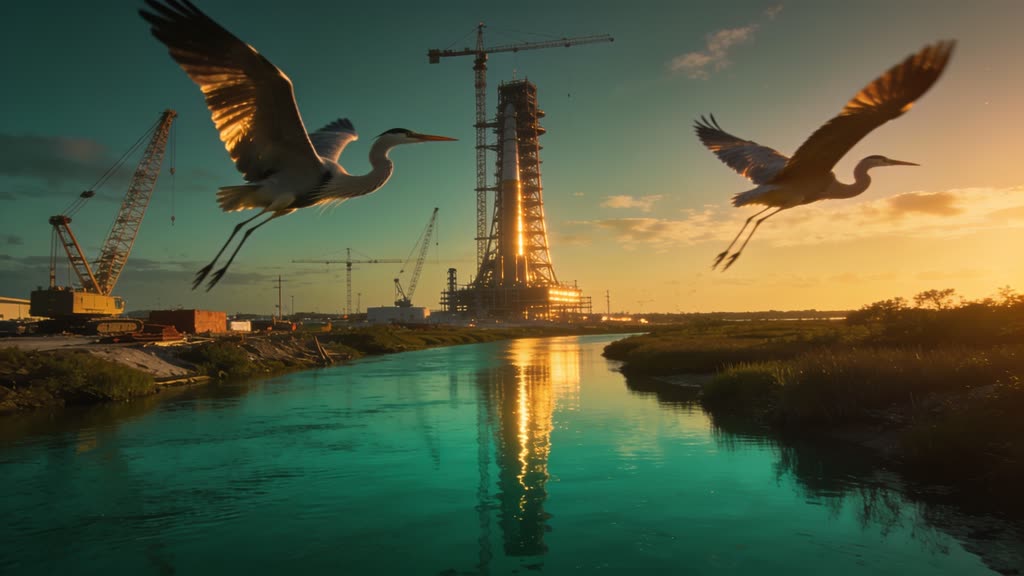
120:00–125:00To Orbit and OutVERIFIED
America's Space Coast
Starlink conquers the airlines; a $100-billion Louisiana Starbase makes the Gulf America's Space Coast; reusability unlocks landlocked federal spaceports.
▸ $100 billion is being invested into the Louisiana economy to build a second Starbase.
✓ Confirmed: SpaceX announced Starbase Louisiana on Aug 25, 2026 — a $100B, 10-pad spaceport in Vermilion Parish on the Gulf Coast, construction from 2027, first launch targeted 2029. The White House 'Golden Age of Space Transportation' fact sheet (Aug 20–21) targets 1,000+ US launches a year by 2030, with licensing streamlining and spaceport-infrastructure directives — including the federal-land detail Alex cites.
Peter · Alex · Dave
26
125:00–130:00To Orbit and OutHOST TAKE
The Xerox Falcon
China lands a Falcon 9 lookalike; Dave trusts SpaceX's compounding learning loop. AMA opens: mind viruses, X Prizes, Intel's fab gamble.
▸ Dave: Intel is burning almost $2 billion a quarter on its fab business and just raised another $20 billion for more fabs.
Peter · Dave · Salim · Alex
27
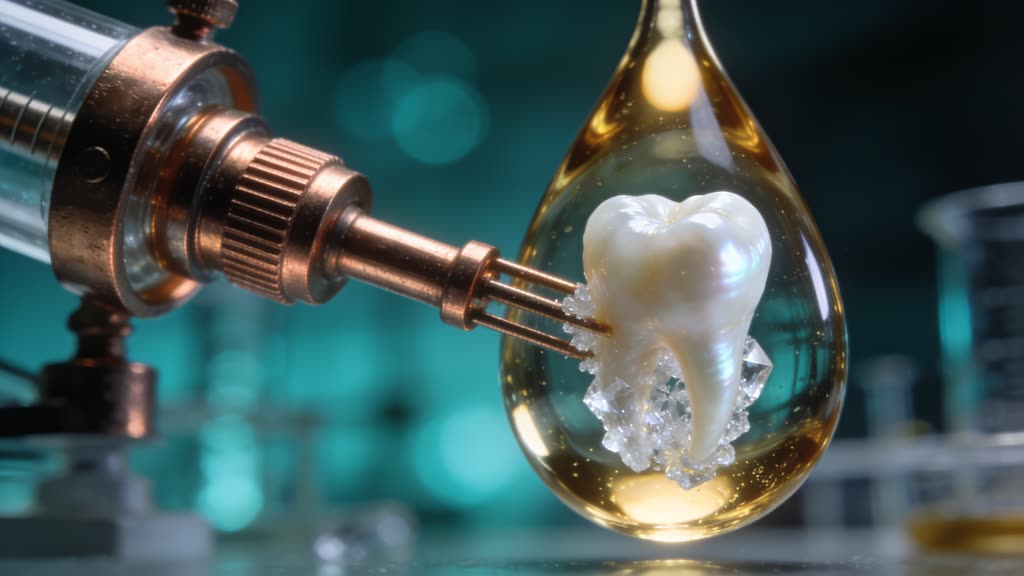
130:00–135:00To Orbit and OutVERIFIED
Teeth, Truth, Rapid Fire
Rapid fire: a Kyoto drug regrows teeth by 2030; Dave would aim 100x compute at self-improvement, then longevity. Are the hosts bots?
▸ Alex: a Kyoto University spinoff drug, TRG-035, targets tooth regrowth with general availability by 2030.
✓ Accurate in every particular except the drug code: it is TRG-035, from Toregem BioPharma, the Kyoto University spinout. An anti-USAG-1 antibody — USAG-1 suppresses tooth-forming signals, so it literally 'blocks the blocker,' as Alex said. Human trials began in 2024; pediatric trials target congenital anodontia; the company's stated goal is market availability around 2030. Alex also correctly flagged: no significant AI component.
Emad · Alex · Dave · Peter
28
135:00–137:30To Orbit and OutINTERLUDE
Optimism to the Max
An AI-made anthem — four minds, four takes, honest debate — closes the show; back in 48 hours, NVIDIA results looming.
Peter · Dave · Salim · Emad · Alex