01
0:00–5:00Passage to Alpha CentauriINTERLUDE
The Missing Fourth Chair
A cold open teases star probes and self-designed chips; Salim is stuck in a TSA line, so three hosts carry the show.
Peter · Dave · Alex
02
5:00–10:00Passage to Alpha CentauriVERIFIED
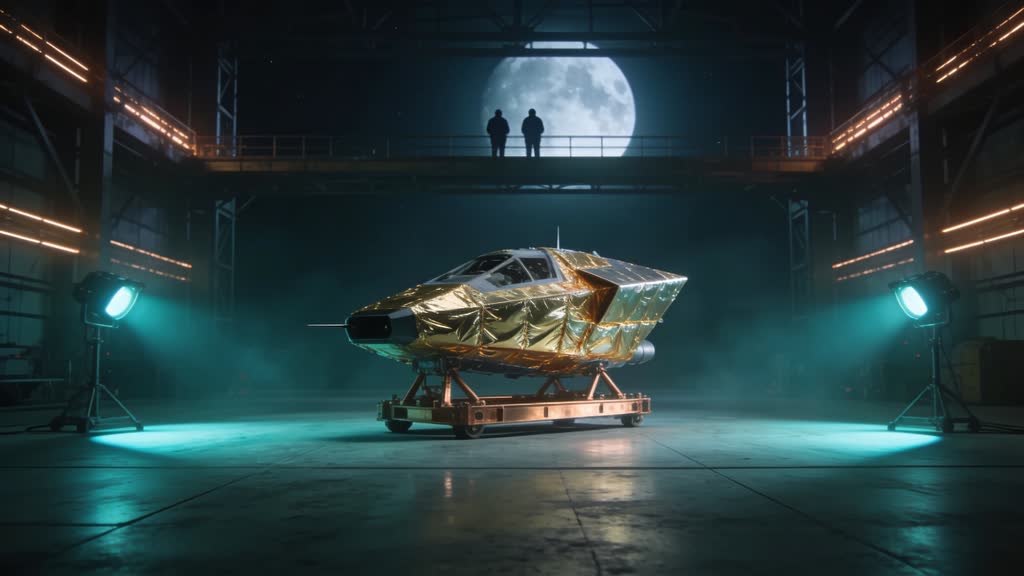
Announcing the Fermi Explorer
Alex brings on his own PSI co-founder Matt and StarCloud's Philip to announce Fermi Explorer, a cheap probe aimed at Alpha Centauri.
▸ The mission's hard constraints: 99% of the way to Alpha Centauri within 80,000 years, a 1 kg payload, launch within three years, under $15 million all-in.
✓ Real and public — the hosts' own venture, checked against its own documents: fermiexplorer.org (a 501(c)(3)) plus same-day coverage (Space.com, Payload, MIT Tech Review, Sep 1) confirm under-$15M, launch before end of 2029, a 1 kg 1U payload, a ~77,500-year transit (80,000 is the design constraint), and 50% self-assessed odds. 'First aimed at another star' survives falsification: the Voyagers and Pioneers were never targeted at one, and Breakthrough Starshot never flew.
Peter · Dave · Alex · Philip
03
▶ ANIMATED
10:00–15:00Passage to Alpha CentauriBOLD CLAIM
The Perihelion Pump
Philip credits Alex's startup PSI: its AI burns ten billion tokens and finds the sun-skimming trajectory human teams missed for months.
▸ Philip says PSI's AI found the 'perihelion pump' sun-diving trajectory in about a week after six months of stuck human attempts — PSI is Alex's own company.
⚠ The maneuver and PSI's authorship are the mission's own claims ('the first time generative AI has independently devised a novel trajectory' — their words). The token math is self-reported and inconsistent: ~10 billion over a week on air, 'a billion tokens… three days' as told to MIT Tech Review the same day. Only a non-peer-reviewed paper exists so far.
Philip · Matt · Peter
04
15:00–20:00Passage to Alpha CentauriVERIFIED
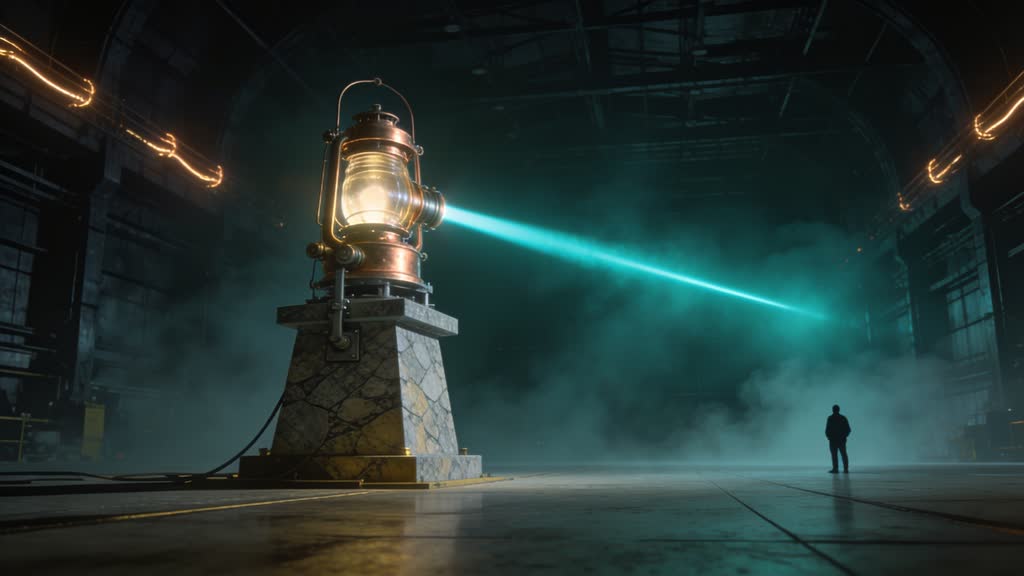
Interstellar on the Cheap
Philip walks through the hardware: a small xenon-heavy craft, off-the-shelf ion thrusters, a rideshare launch, humanity's first probe aimed at a star.
▸ The craft is a ~100 kg smallsat, roughly 64% xenon by mass, flying off-the-shelf gridded-ion thrusters after a ~$500,000 rideshare to orbit.
✓ Matches the mission FAQ within rounding — 100–110 kg launch mass, ~64% xenon (not 60%), gridded-ion thrusters at 2,400–2,800s Isp. Two patches: 'gridded iron Hall Effect' conflates two different thruster types — these are gridded-ion, not Hall-effect — and the FAQ's preferred ride is a GTO rideshare, not 'any LEO orbit.'
Peter · Philip · Dave · Alex
05
20:00–25:00Where Is Everybody?HOST TAKE
The Galactic Petting Zoo
Alex weighs three Fermi answers — we're first, we're filtered, we're in a zoo — and Philip admits the flyby misses wide.
▸ Philip expects a miss distance of up to 2,600 AU — still within the target system's Oort cloud — with the probe electronically dead long before arrival.
✓ The miss math is on the mission's own FAQ: up to ~2,600 AU off target — still inside the destination system's Oort cloud, with retroreflectors for detectability, the probe long dead on arrival. The Starshot obituary is documented too: Scientific American chronicled Breakthrough Starshot's quiet demise — the lasers were never ready, exactly as Alex says.
Alex · Peter · Matt · Philip
06
25:00–30:00Where Is Everybody?BOLD CLAIM
A Ten-Billion-Token Week
Alex bets a commercial interstellar market exists; Philip says outside trajectory analysts, some formerly at JPL, checked his own mission's math.
▸ Matt puts the AI's run at about 10 billion total tokens against five-to-six hours of human time — figures from the hosts' own venture; the ex-JPL review is also their own account.
⚠ Every number in this stretch is the venture's own: the 10-billion-token figure conflicts with the billion-tokens-in-three-days version given to MIT Tech Review, and the 'ex-JPL validation' appears nowhere outside this podcast. Alex's commercial-interstellar market is a bet he pre-registers on air — his word for it.
Philip · Alex · Peter · Matt · Dave
07
30:00–35:00Where Is Everybody?VERIFIED
Seed Money for Physics
Matt reveals PSI's $58 million seed round, announced the same day; the guests leave and the hosts marvel at token-priced problem difficulty.
▸ PSI — the startup Alex co-founded — announces a $58 million seed round led by Breakthrough Energy Ventures the same day it exits stealth.
✓ Confirmed via PR Newswire (Sep 1): a $58M seed led by Breakthrough Energy Ventures; founders Matt Pines, Alex Klokus and Dr. Alexander Wissner-Gross — the co-host, disclosed on air. The open-source 'Get Physics Done' package is real (GitHub/PyPI, ~Mar 2026). Same-day seed + mission reveal + this segment = one coordinated launch, and it worked.
Peter · Matt · Alex · Dave · Philip
08
▶ ANIMATED
35:00–40:00The Cursor BlockadeVERIFIED
OpenAI Pulls the Plug
OpenAI cuts Cursor's access to GPT models after SpaceX's purchase; Elon fires back and Anthropic pledges Claude support within hours.
▸ OpenAI's stated reason: 'we cannot be confident that SpaceX will use our technology within the terms of service based on our experience with Elon Musk's companies violating contracts.'
✓ All real, near-verbatim: OpenAI announced Aug 29 it ends Cursor's model access Nov 12, citing exactly the ToS-trust rationale quoted (Bloomberg/CNBC); Musk's reply is word-for-word (the circulating post really does read 'Greg Stockman'); Anthropic's Tom Brown pledged expanded Cursor compute the same day. One fix: OpenAI published a statement — it didn't 'write Elon an email.' The 'Sam alone against the Elon–Dario alliance' line is unattributed X framing, not reporting.
Peter · Dave · Alex
09
40:00–45:00The Cursor BlockadeVERIFIED
Alliances in Free Fall
The hosts game out shifting alliances; Dave's Colossus assertion checks out — Anthropic really rents Elon's Memphis supercomputer.
▸ Dave: Anthropic 'desperately needed' Elon's Tennessee compute — and the deal is real: all of Colossus 1 in Memphis, 220,000+ GPUs, announced May 6, 2026.
✓⚠ Dave's Colossus jab checks out — Anthropic really rents all of Colossus 1 in Memphis (announced May 6: 220,000+ GPUs, 300+ MW; ~$1.25B/month per reports); 'desperately' and 'through the nose' are his gloss. Two theories in this stretch fail the record: Anthropic-on-AWS keeps retained data INSIDE AWS — 'your content is not shared with the model provider' (AWS docs) — nothing streams to 'Dario headquarters'; and the Windsurf history runs backwards: Anthropic cut Windsurf in June 2025 over the reported OPENAI acquisition, five weeks before Google's acqui-hire.
Dave · Alex · Peter
10
45:00–50:00The AGI CountdownVERIFIED
Four Months to AGI
After a sponsor read, Peter relays TIME's story: Altman expects an internal system he'd call AGI by year's end.
▸ Per TIME (Aug 27, 2026), Altman expects an internal system he'd call AGI by end of 2026, with Mark Chen putting OpenAI '80% of the way' on internal benchmarks.
✓ Prior receipt (TIME, Aug 27): the end-of-2026 AGI expectation, Mark Chen's '80% of the way' on internal benchmarks, Astra by name, the 16-agent math demo and Jakub Pachocki's research-intern line are all in the piece. Internal benchmarks, not independent ones — as Peter himself flags.
Peter · Alex
11
50:00–55:00Paying for OutcomesEARLY SIGNAL
Pay When It Works
Alex likens agent teams to dying scribes passing oral histories, then the show turns to OpenAI's new pay-per-outcome pricing.
▸ OpenAI is reportedly piloting pay-on-completion for its largest customers — following Salesforce's Agentforce outcome pricing, which dates to 2024–25, not this week.
⚠ Early signal — OpenAI's move is reported, not announced: The Information (~Aug 30) says select large accounts are piloting pay-on-completion; terms and customers unconfirmed by OpenAI. The Salesforce precedent is real but two years old — Agentforce launched at $2 per conversation in Sept 2024 (Flex Credits followed) — and it prices per outcome, not on customer revenue.
Alex · Dave · Peter
12
55:00–60:00Paying for OutcomesHOST TAKE
The Reasoning Ad Market
Alex pre-registers a prediction: AI reasoning gets priced like ads — by compute, by token, or by outcome — with auto-pausing campaigns.
▸ Alex: 'I think it ends the way quantitative digital advertising is monetized' — an equilibrium of paying by flops, by tokens, or by outcomes.
Dave · Alex · Peter
13
▶ ANIMATED
60:00–65:00The Designless ChipBOLD CLAIM
The Redwood Reveal
Architect Labs — a company the hosts back — unveils Redwood, a chip its AI designs end-to-end in two weeks.
▸ Architect claims Redwood went spec to silicon-ready in two weeks with zero bugs and 3.4x a Jetson's performance per watt — its own blog places that run on FPGA; no silicon exists yet.
⚠ The announcement is real (company blog + paper, Aug 27) — but there is no silicon. Architect's own blog places the zero-bug claim on 'the first RTL drop,' running on an AMD Versal FPGA at 250 MHz, with TSMC tapeout still ahead ('real silicon is the final ground truth' — their words). The 3.4× is versus a Jetson Orin Nano by process-class extrapolation, company-measured. Founders: Ebrahim Hussain and Aaditya Subedi.
Peter · Dave · Alex
14
65:00–70:00The Designless ChipHOST TAKE
We're All Guilty
Alex discloses he advises Architect; Dave's fund holds it and Peter invests — 'we're all guilty' — then they weigh NVIDIA's peril.
▸ On air, Alex discloses he advises Architect Labs, Dave's Link Ventures holds it, and Peter is in that fund: 'We're all guilty.'
Alex · Dave · Peter
15
70:00–75:00The Designless ChipINTERLUDE
Polyester and Premieres
Alex notes NVIDIA never released ChipNeMo; then ads and promos: Moonshots Live, a CBS Star Trek premiere, uniform banter.
▸ Moonshots Live runs September 25 in downtown LA; Peter says CBS holds a Hollywood premiere of the 60th-anniversary Star Trek documentary the evening before.
✓ Moonshots Live checks out on moonshots.com — Sept 25, downtown LA, that lineup, $5M+ in XPRIZE awards, and a Sept 24 evening screening. The CBS attribution rests on the show's own 'press release hitting this morning'; no independent record yet, and the one documented 60th-anniversary film, 'The Sixty-Year Mission,' is a non-CBS release dated Oct 9. Star Trek's actual 60th: Sept 8, 2026.
Peter · Alex · Dave
16
75:00–80:00The Energy WallVERIFIED
Fifteen Idle Gigawatts
Star Trek dreams yield to Musk's math: 15 idle gigawatts in 2027; SpaceX and Tesla each build 100 gigawatts of solar.
▸ Musk tweets that 15 GW of AI compute built in 2027 cannot be powered that year, and that SpaceX and Tesla are each building 100 GW per year of solar production capacity.
✓ Both posts are real (Aug 29) and read near-verbatim on air. The detail that survives checking: Musk's post opens 'Consensus estimate is that ~15GW…' — he is relaying analyst consensus, not his own fleet data. 'Each building 100GW/year' is exact. The 'midsize American city' gloss isn't in the post — 15 GW is roughly New York City's peak load.
Peter · Alex · Dave
17
80:00–85:00The Energy WallHOST TAKE
King of Natural Gas
Dave calls SpaceX his biggest holding; Alex predicts Elon ironically becomes the Gulf Coast's liquefied natural gas king.
▸ Alex pre-registers a prediction that Elon 'ironically becomes the king of liquid natural gas' on the Gulf Coast, feeding star bases and terrestrial data centers alike.
Dave · Alex · Peter
18
▶ ANIMATED
85:00–90:00Satellites Against the SunVERIFIED
A Thermostat for Earth
Musk proposes AI satellites between Earth and sun to titrate sunlight; Peter pitches his solar-shades XPRIZE; Alex wants steerable hurricanes.
▸ Musk: 'extremely severe extinction events happen every hundred million years or so,' and humanity has 'about 50 years or so' to field temperature-controlling satellites.
✓ The posts are real (~Aug 30) and quoted accurately: sustainable energy 'not enough,' the ~100-million-year extinction cadence, '50 years or so to take action.' One detail the show skipped: Musk's satellites launch off the Moon. The cadence and the deadline are his own estimates — the geologic record's mass extinctions are real but irregular.
Peter · Alex · Dave
19

90:00–95:00Satellites Against the SunHOST TAKE
The Fifty Lost Years
Talk turns to who governs a planetary thermostat; Alex argues the West wasted fifty years fearing physical-world engineering.
▸ Alex dates the West's 'allergy' to engineering the physical world to the Silent Spring era around 1971, calling it fifty lost years of reactors, geoengineering, and moon landings.
Alex · Dave · Peter
20

95:00–100:00Assemblers to StarfleetVERIFIED
Soft Machines, Nuclear Ships
Alex argues for soft, biological nanomachines over diamond ones; a heart-scan ad runs; Trump announces a nuclear Mars ship.
▸ President Trump announces NASA is working on a nuclear-powered interplanetary spacecraft to launch on a Mars mission in 2028, promising a 'massive American Starfleet.'
✓ Verbatim: every clip line matches Trump's Aug 28 remarks at Johnson Space Center (the Artemis II crew's Congressional Space Medal ceremony). The program is NASA's nuclear-electric demo 'Space Reactor-1 Freedom,' unveiled Mar 24 with launch targeted before end of 2028. The '7 months down to 1–2' transit gloss is the hosts' — the 2028 flight is an uncrewed demo.
Peter · Alex
21
▶ ANIMATED
100:00–105:00Assemblers to StarfleetVERIFIED
Starfleet Academy Is Here
Nuclear engines promise one-to-two-month Mars transits; Trump charters a United States Space Academy and the hosts cheer Starfleet.
▸ Days before taping, Trump chartered the United States Space Academy, modeled on West Point and the Naval Academy — administrator Jared Isaacman calls it 'a transformational step.'
✓ The executive order was signed Aug 28 at Johnson Space Center — exactly four days before recording (NASA release). One precision: Isaacman chairs the 120-day planning commission that will design the Academy — he wasn't 'put in charge' of the school itself — and no site is chosen, so 'probably Texas' is a guess.
Peter · Dave · Alex
22
105:00–110:00Questions from the BridgeHOST TAKE
Mills, Fans, and Terafab
AMA answers: asymmetric fan blades could hush data centers, old mills host them, and Alex predicts an NVIDIA-Terafab pact.
▸ Alex predicts NVIDIA is quietly striking a deal to become the anchor tenant of Elon's Terafab as its substitute for TSMC.
✓ The pieces are real even where the pact is a prediction: Terafab is Musk's up-to-$119B Texas fab (Intel joined in April); Apple's asymmetric fan-blade noise patents exist; ChipNeMo (2023) was never publicly released. The NVIDIA-anchor-tenant deal is Alex's own pre-registered bet — no record of it.
Alex · Dave · Peter
23
▶ ANIMATED
110:00–115:00Questions from the BridgeHOST TAKE
A Market for Weather
Dave channels Ilya Sutskever's 'the AI just wants to learn'; Alex sketches municipalities trading rainfall toward a re-greened Sahara.
▸ Alex predicts a 'vibrant market' where regions trade weather itself — including precipitation deals capable of re-greening the Sahara.
Dave · Alex · Peter
24
115:00–116:53Questions from the BridgeINTERLUDE
A Galaxy for Goodbye
Galaxy-gifting banter closes the show; the hosts sign off missing Salim, who spends the entire episode in a line.
✓ The wedding reporting exists — Fortune covered Aschenbrenner's Carmel wedding days after his Situational Awareness fund reportedly lost roughly two-thirds of ~$45B (the 'hiccup') — though the galaxy promise is secondhand 'reportedly,' and she is now his wife. One number needs turning over: 'two trillion galaxies' is the superseded 2016 estimate; NASA's 2021 New Horizons measurement points to hundreds of billions.
Peter · Alex · Dave