Moonshots · Visual Reel · EP 297 · recorded live 2026-09-25 · aired 2026-09-30 · runtime 43:22

The Second Ark

Episode 297 — Recorded live at Moonshots Live, Los Angeles. Ben Lamm — CEO of Colossal Biosciences, the $10.2B de-extinction and synthetic-biology company — argues the dataset has become more valuable than the model, promises mammals born entirely outside a womb within 24 months, and wants to back up the biosphere itself. Nine beats, every tentpole run against primary sources.
How to read this page: Ben Lamm speaks throughout about Colossal Biosciences, his own company — edit counts, timelines and mammoth-line figures are self-reported unless independently confirmed, and where independent scientists disagree (the dire wolf pups) the correction is carried on the plate. Peter Diamandis pitches LifebankUSA, one of his own companies, on air. The closing Hilton sponsor read is excluded.

The film · Born outside a womb in 24 months? A dated promise, logged

Film 1:39 · narration is a machine voice · shots tagged AI recreation are illustrative, never evidenceEvery claim and its source is below
01 · The Teacup Mammoth Request02 · The Dataset Beats the Model03 · Fewer Than 100 T-Rexes04 · Who Decides What Returns05 · A Thousand Edits Coming06 · Mouse Into Wolf07 · Tens of Thousands of Mammoths08 · Grass, Albedo, Permafrost09 · Backing Up the Biosphere
VerifiedEarly signalHost takeBold claimInterlude
01
The Teacup Mammoth Request
0:00–4:29Cold OpenINTERLUDE

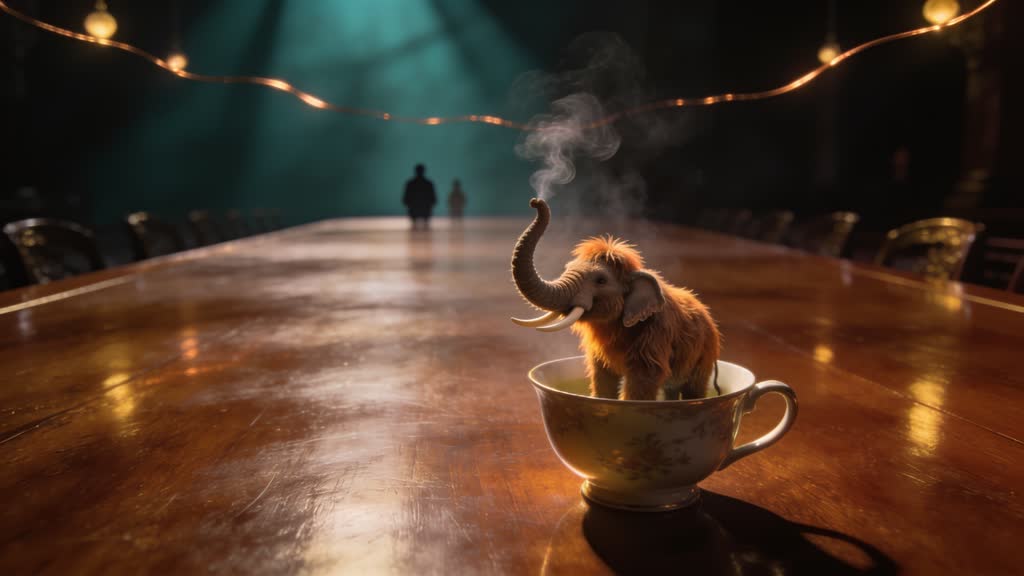
The Teacup Mammoth Request

Ben Lamm, CEO of Colossal Biosciences (the de-extinction company), jokes about pet mammoths and credits outsider curiosity, mentored by geneticist George Church.
▸ Colossal is "now a company worth over $10 billion"; the "number two request we get is teacup mammoths."
⚠ The valuation checks out: Colossal raised $200M at a $10.2B valuation in January 2025, and 2026 coverage calls it a $10-12B company, so 'over $10 billion' understates if anything. One title fix carried from the tape: George Church is Professor of Genetics at Harvard Medical School and a Colossal co-founder, not head of the department. (techcrunch.com)
Peter Diamandis, Ben Lamm
02
The Dataset Beats the Model
4:30–9:48AI Meets the LabVERIFIED

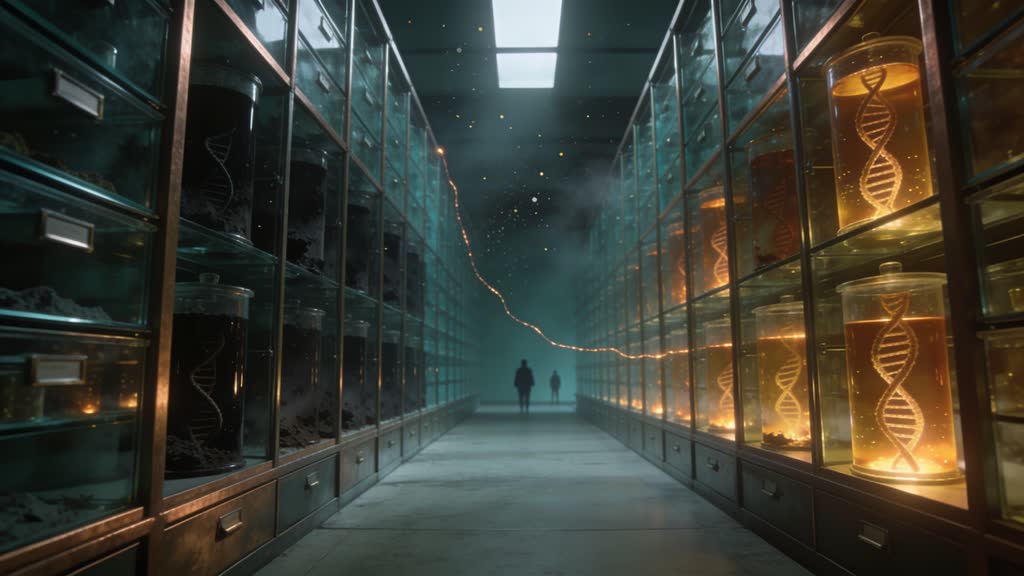
The Dataset Beats the Model

Why AI chatbots can't do biology yet: published experiments often fail to repeat, so Colossal bets its genome library matters more than any model.
▸ Rerunning published mouse experiments gives "somewhere between 40 and 60% failure rate on published work."
✓ Verified, and if anything conservative: Amgen reproduced only 6 of 53 landmark cancer papers (Begley & Ellis, Nature 2012), and the Reproducibility Project: Cancer Biology found roughly half of experiments failed to replicate. The 40-60% band sits inside the published range. (nature.com)
Dave Blundin, Ben Lamm
03
Fewer Than 100 T-Rexes
9:49–14:40Resurrection LimitsVERIFIED

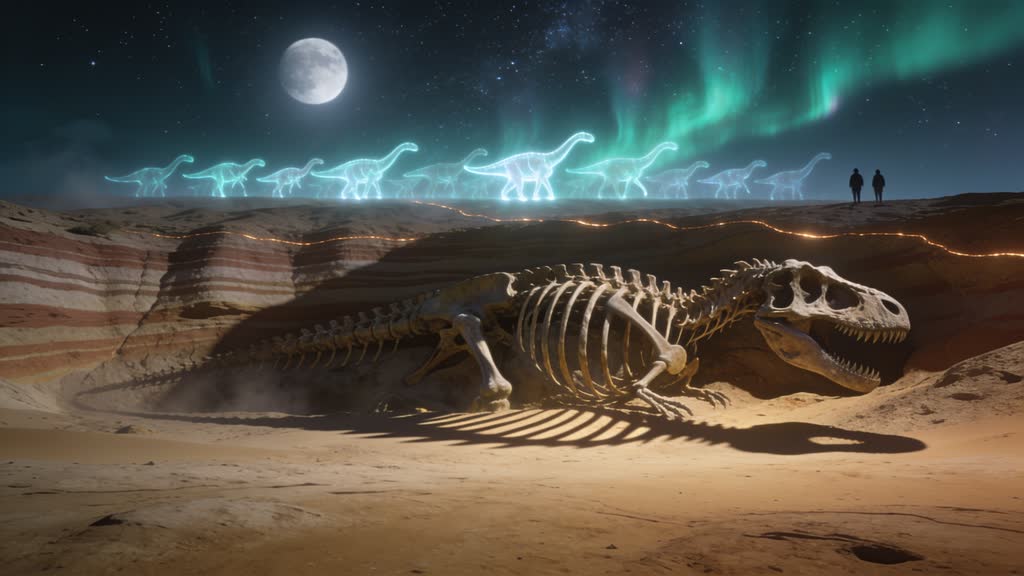
Fewer Than 100 T-Rexes

De-extinction's hard truth: almost nothing fossilizes. Lamm says engineering new life is likelier than reviving every creature — or every human — that ever lived.
▸ "There's less than 100 T-Rexes that have ever been found," though billions allegedly lived on Earth.
✓ Both halves verified: documented T. rex specimens number roughly 50-100, and Marshall et al. (Science, 2021) estimated about 2.5 billion T. rex individuals ever lived. (science.org)
Alex Wissner-Gross, Ben Lamm, Peter Diamandis
04
Who Decides What Returns
14:40–19:21Playing GodsHOST TAKE

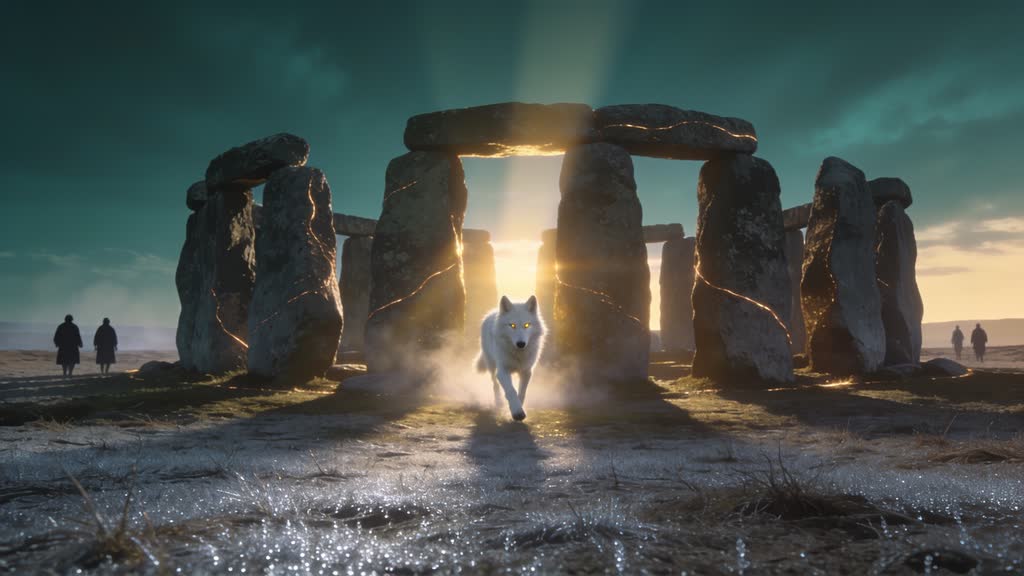
Who Decides What Returns

From Pikachu requests to Colossal's dire wolf pups — gray wolves carrying 20 edits, per independent scientists: Colossal weighs ecology, indigenous ties, and pop culture — wielding what Lamm calls history's most powerful technology.
▸ Lamm: synthetic biology intersecting with compute, AI, and quantum "will be more powerful than any weapon system that's ever been created."
⚠ The weapon-system comparison is the guest's own forecast, not a checkable claim. The dire wolf context carries a correction: the pups (Romulus, Remus, Khaleesi, announced April 2025) are real, but independent scientists describe them as gray wolves carrying 20 edits across 14 genes — look-alikes, not an uncontested de-extinction, and no peer-reviewed paper accompanied the announcement. (science.org)
Peter Diamandis, Alex Wissner-Gross, Ben Lamm, Moonshot co-hosts
05
▶ ANIMATED
19:21–24:11The Biological SingularityBOLD CLAIM

A Thousand Edits Coming

The curve goes vertical, by Lamm's own count: gene edits jumped from 20 to 300-plus, now testing 1,000 — and he predicts mammals born entirely in artificial wombs within two years.
▸ "We are delivering 300 plus [edits] at 90 plus percent efficiency, consistently... We're now testing 1,000"; Colossal will birth mammals fully ex utero "within 24 months."
⚠ Self-reported: the 20-edit baseline is anchored (the dire wolf record, April 2025), but the 300+ edits at 90%+ efficiency and the 1,000-edit tests appear nowhere outside Lamm's own statements — no paper, no preprint, no independent replication. The ex utero birth is a dated founder prediction, not a capability: no mammal has ever been gestated birth-to-delivery outside a womb. Lamm himself adds the caveat that the curve 'doesn't mean it's going to continue.' (science.org)
Peter Diamandis, Ben Lamm, Dave Blundin
06
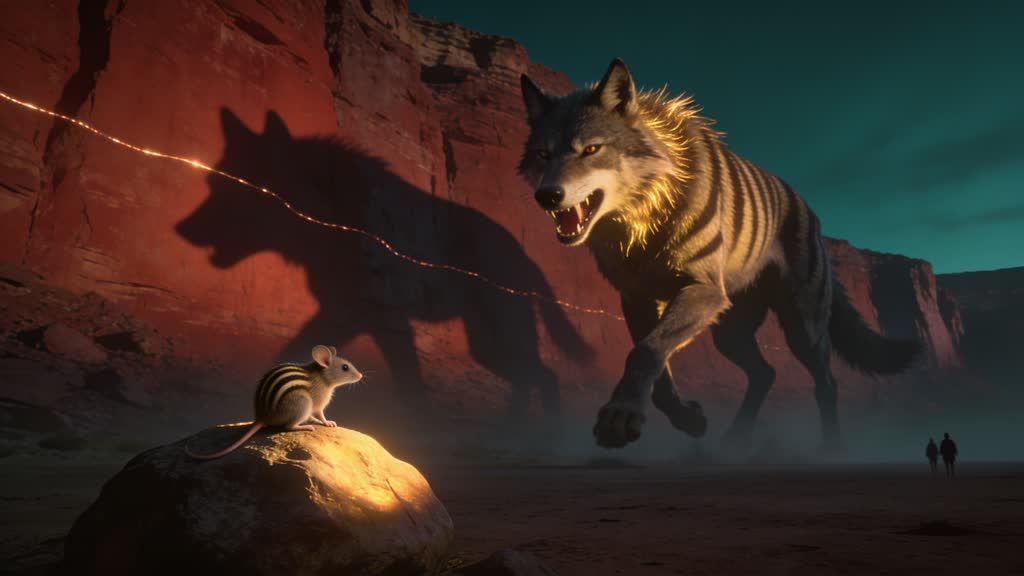
Mouse Into Wolf
24:12–27:50Genotype to PhenotypeVERIFIED

Mouse Into Wolf

Mapping genes to traits: a marsupial mouse must scale 1,500-fold toward the Tasmanian tiger, while Colossal's woolly mice needed only eight edits.
▸ The thylacine's model species, the fat-tailed dunnart, is "a 1,500x fold from a marsupial mouse to a marsupial wolf"; the woolly mice took eight edits in one delivery.
✓ Verified on both counts: the fat-tailed dunnart is Colossal's documented thylacine model species, and a ~15g dunnart to a ~15-30kg thylacine makes 1,500x a fair middle. The Woolly Mouse (announced March 2025) carried eight edits across seven genes in one delivery — though released by press release and preprint, not peer review, and it demonstrates editing capability, not mammoth biology. (biospace.com)
Ben Lamm, Dave Blundin, Peter Diamandis
07
▶ ANIMATED
27:51–31:30Herds, Not SpecimensBOLD CLAIM

Tens of Thousands of Mammoths

On the ethics of lab-born animals: Lamm says 16 mammoth lines run in parallel, herds are the goal, and elephant orphanages teach Colossal how to raise them.
▸ Colossal has "16 different lines being worked on at the same time" and wants to bring back "tens of thousands" of mammoths.
⚠ Self-reported: no outside record of 16 engineered mammoth lines exists — the number first surfaces on this tape — and 'tens of thousands' is aspiration, not plan-of-record. The Colossal Foundation behind the conservation framing is real ($50M launch, announced doubling to $100M), but its partner count and free-licensing terms are also the company's own framing. (company-reported; no independent source)
Peter Diamandis, Ben Lamm, audience questions
08
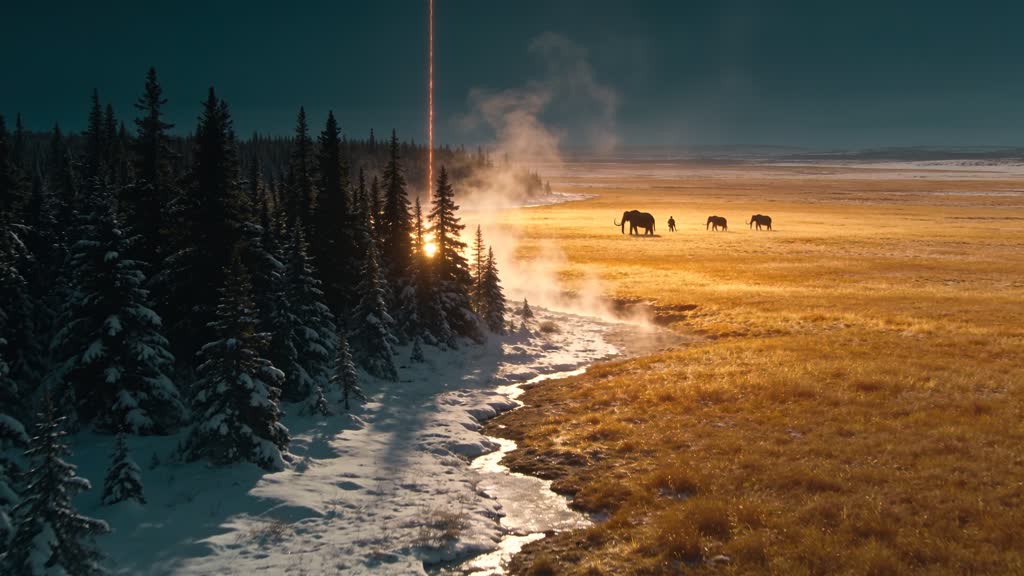
Grass, Albedo, Permafrost
31:31–36:10Mammoth Climate EngineEARLY SIGNAL

Grass, Albedo, Permafrost

George Church's contested climate case: mammoths fell trees, grassland stores more carbon and reflects sunlight, cooling permafrost — the tape's cooling figures are an internal model; the published model says ~2-4°C. Plus confirmed AI spinout Astromech ($20M at a $3.8B mark).
▸ The tape says grass is "about six times more efficient" at carbon with "a two to three X albedo effect" and claims a larger summer permafrost cooling — the record shows the published model (Beer et al., 2020) at roughly 2-4°C soil cooling in high-density scenarios, mostly via winter snow trampling; the tape's multiples match no published number.
⚠ The underlying mammoth-steppe hypothesis is real, published science (Zimov; Beer et al., Scientific Reports 2020), and grassland albedo does exceed boreal forest. But the 6x carbon figure, the 2-3x albedo multiple, and the tape's summer-cooling number are an internal Colossal/Church modeling exercise — Lamm himself notes scientists inside Colossal dispute the magnitude. Screen the published ~2-4°C figure, labeled as a model. (nature.com)
Dave Blundin, Ben Lamm, Peter Diamandis
09
▶ ANIMATED
36:11–42:41Back Up LifeHOST TAKE

Backing Up the Biosphere

The unfunded moonshot: the tape says half of species in 25 years — the record shows IPBES's ~1 million species threatened within decades. Colossal is building open biovaults with governments, including a confirmed US Fish and Wildlife partnership — and stays optimistic on AI.
▸ The tape says "we are going to lose half of biodiversity in the next 25 years"; the record shows IPBES (2019) estimating ~1 million species threatened with extinction within decades — the 'half' projections in the literature run to 2100. Colossal announced a BioVault biobanking partnership with US Fish and Wildlife (DOI MOU, June 2026).
⚠ The headline number is dramatized: no published consensus says half of biodiversity in 25 years — IPBES puts ~1 million species at threat 'within decades,' and the 'half' figures in the literature run to 2100. The USFWS partnership is real on a federal primary (DOI press release, June 25, 2026, a biobanking MOU for ESA-listed species), though it was announced ~3 months before taping, not 'just.' (ipbes.net)
Peter Diamandis, Ben Lamm, audience
The scout's ledger

Thirteen signposts for the gardens

What Ben Lamm's biological singularity opens for us — money angles, ways in, and what our own agents can build within days. One card is the scout's pick; one card is the reality check. Nothing here pulls an engineering hour off the P0.

SCOUT'S PICKDataset Beats the ModelRDKG · days

Lamm says it flat out at 9:41: 'the dataset is more valuable than the model' — the exact RDKG thesis, spoken by the founder of a $10B company on stage.

▸ Agent mints a verified signal card + 40-80 word Citation Capsule ('Dataset > model — Ben Lamm, Colossal, Moonshots #297, 2026-09-30') into content/signals.json (check max card number first), cross-linked to the MTP line. Zero engineering; one agent session.

Why the pick: a $10B founder just said the Gardens' founding thesis out loud on stage — the dataset, not the model, is the scarce asset. Minting that as a dated, source-stamped citation capsule is pure autonomous agent work, costs nothing off the P0, and is the single clearest piece of market confirmation the MTP has received on tape.

The 40–60% Replication GapTKG · HKG · RDKG · days

40-60% of published mouse experiments fail to reproduce because labs name the same gene differently (6:49) — the reproducibility crisis is a nomenclature crisis. The failure band is verified against the replication-crisis literature.

▸ Agent drafts a citation-first frontier brief: 'Verified ground truth as the cure for the 40-60% replication gap,' positioning TKG/HKG's receipt-per-claim pattern as exactly what bio needs. Primary sources: replication-crisis literature, this episode. Spec/doc only.

The Multiplex Editing CurveRDKG · TKG · days

Colossal went from victory laps at 20 gene edits to 300+ at 90% efficiency to testing 1,000 in roughly a year (20:38) — a public exponential anyone can chart. The 20-edit baseline is independently anchored; the 300+ and 1,000 figures are Lamm's own, company-reported and unreplicated.

▸ Agent builds a sourced 'multiplex editing curve' signal with freshness date, the self-reported label on every point past 20 edits, and the explicit hype-label caveat Lamm himself gave ('doesn't mean it continues'). Becomes RDKG's model demo of earned optimism vs hype. Chart via production dataviz tooling, no new build.

The Prediction LedgerRDKG · days

Ex utero mammalian birth 'within 24 months' (22:33) is a dated, falsifiable founder prediction — perfect fuel for a foresight garden.

▸ Agent opens a public-facing 'Prediction Ledger' doc in the repo: every dated claim from this episode (ex utero 24mo, prompt-an-animal <10yr, synthesis beats editing) logged with source timestamp, a self-reported label, and a review date. Agents re-verify on schedule. Pure doc work, compounding asset.

The Biodiversity Backup EconomyRDKG &middot; FKG · weeks

'We back up our photos, our texts, our emails... we have got to back up life' (36:45) — biovaults are becoming government-funded infrastructure with US Fish & Wildlife already signed (DOI MOU, June 2026, confirmed on a federal primary).

▸ Agent writes a 'Biodiversity Backup Economy' opportunity brief: who funds it (federal confirmed; sovereign and Dubai company-reported), what the data layer is worth, and where a verified-knowledge player sells picks and shovels (standards docs, verification schemas). FKG angle: follow the federal money.

Inflection Models, ConvergingRDKG · days

Lamm's Astromech 'inflection models' that plug domain datasets into foundation models as a 'traffic control cop' (35:08) is literally the KG Machine-lane architecture with a biotech skin. The spinout is independently confirmed ($20M at a $3.8B mark, Aug 2026); the architecture description is the founder's own.

▸ Agent drafts a one-page architecture comparison (Astromech inflection models vs KG verification node + MCP endpoint) proving the pattern is converging industry-wide — a Circle-facing validation memo and investor talking point for John Bou. Doc only.

Middleware Eats the MiddlemenHKG &middot; RDKG &middot; FKG · days

Colossal retrained scientists to stop paying 'the Deloittes or Accentures of the world' by using LLMs as middleware (5:54) — the services-displacement play Lamm calls his quiet win.

▸ Agent writes a signal: 'LLM middleware is eating bio-ops consulting.' Maps the same move for health/toxicology ops (HKG's healthcare-ops lane is John's turf). Capsule + brief, agent-executable today.

Who Decides What ReturnsRDKG &middot; TKG · weeks

There is no algorithm for which species to bring back — Lamm admits they weight food web, indigenous voice, and pop culture by feel (17:00).

▸ Agent specs a 'De-extinction Decision Framework' as a verified RDKG specimen: criteria, weights, primary sources, receipts. First citable artifact in a space with zero rigorous frameworks — a citation magnet for when the Gravity Well opens. Spec/doc only.

Myth-to-Lab StoriesEdKG &middot; RDKG · days

Colossal's dire wolf pups — gray wolves carrying 20 edits, per independent scientists, not an uncontested de-extinction — pulled Game of Thrones and Magic: The Gathering fans into wolf conservation and genome literacy (17:47): pop culture as an education funnel, proven on stage.

▸ Agent drafts an EdKG 'specimen story' template: myth-to-lab explainers (Colossal's dire wolf pups with the 20-edit correction carried, mammoth, thylacine) with citations. AI video/image tools via KG Visual Studio render the visual cards autonomously; agents assemble the reel from the existing pipeline. Days, no new tooling.

The Pipeline Proves ItselfRDKG · days

This episode IS the podcast-to-cinema pipeline's proof case: a 43-minute transcript just yielded a dozen verified signals before lunch.

▸ Agent formalizes the EP #297 run as the repeatable recipe doc (transcript -> signals -> capsules -> reel) and queues the next 3 Moonshots episodes for autonomous overnight processing. The pipeline processes podcasts while Chilly sleeps — RSI heartbeat made visible.

The Original Boot DiskHKG &middot; TKG &middot; FKG · weeks

LifebankUSA — pitched on air by Peter Diamandis as 'one of my companies' (own-venture, self-promotional) — calls the placenta 'the original boot disk' (37:49): biological backup is going direct-to-consumer, not just sovereign.

▸ Agent writes an HKG signal on the newborn-biobanking market (placental stem cells, T cells, NK cells) with primary-source market data, the own-venture label carried on every mention, no medical claims, and the toxicology/verification angle: who verifies these banks' claims? A gap TKG's pattern fills. Brief only.

The Dual-Use CapsuleRDKG &middot; TKG &middot; The Call · quarter

Lamm: synthetic bio + AI + quantum 'will be more powerful than any weapon system ever created' (19:16) — said casually, on stage, to applause.

▸ Agent drafts a dual-use foresight capsule for the Orrery of Futures: the non-toxic, verified ground-truth position as the trust layer this power requires. Maps to MTP directly; strongest The Call material in the episode. Scenario doc, zero engineering.

REALITY CHECKReality Check: The GateBKG &middot; RDKG · quarter

P0 REALITY CHECK: Anthropic's wet-lab announcement (a discovery by Claude agents, confirmed — the system was discovered, not created, with humans doing all wet-lab work) plus Lamm's 'the door's barely cracked open' (41:18) screams BUILD A BIO-GARDEN NOW — and that is exactly this week's loudest temptation.

▸ Parked. No BioKG surface, no genomics MCP endpoint, no biovault prototype — nothing pulls engineering off the BKG first-paying-customer P0. Everything above stays spec/doc/agent work; the bio opportunity gets one line in tasks.todo.md and waits its turn on the capital ladder.

One plate for roughly every five minutes · 9 frames · 3 animated.
Green notes come from a live verification pass against primary sources. This week's corrections: independent scientists say Colossal's dire wolf pups are gray wolves carrying 20 edits across 14 genes, not an uncontested de-extinction; no consensus says half of biodiversity disappears in 25 years — the anchored figure is IPBES's ~1 million species threatened within decades; the Interior–Colossal biobanking agreement dates to June 25, not 'just announced'; and the 300+ edits, 1,000-edit tests, 16 mammoth lines and ex-utero-in-24-months timeline are Lamm's own numbers, carried as self-reported. No real faces — ideas are rendered as archetypes. Imagery generated on our own Replicate account in a locked house style.
The Knowledge Gardens Production powered by XRWorkers.

→ Reel 296  ·  → Reel 295  ·  → Reel 294  ·  → The map